Behind-the-scenes with Melissa Chase, WRIC’s “Showcase”
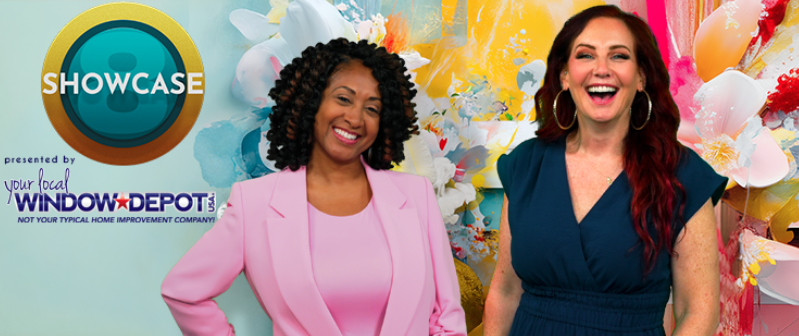
We may be biased, but we think there is a lot to showcase around Richmond. It’s a city rich in art, culture, business, nonprofits and more. Which is why we jumped at the opportunity to reach out to Melissa Chase, co-host of WRIC’s “Showcase” lifestyle show that airs weekdays 3 – 4 p.m. If you’ve been wondering how to pitch or work with the show, this post is for you.
How can public relations professionals be most helpful to you as you shape the show’s direction?
We have a lot of interest in people coming on the show and we are booking very quickly! One challenge we’ve had is getting contacted about really great events coming up, but we won’t have enough time to cover them the way we would like. Getting that advanced notice when it’s possible is great.
I think also making sure that we really truly understand what the event is. I’ve noticed that with a lot of Richmond events, they’ve been happening for so many years, which is awesome, but also there’s been an evolution to so many of those events. It helps to make sure we really know what the event is now and what those opportunities are.
The other piece is that sometimes when we get an event notification from a press release, ticket sales have already ended. One thing we would really like to be able to do when we highlight things is to help promote these events. So, making sure we’re aware of any deadlines on your end is amazing.
We work with several nonprofits who are eager to share their stories. What advice would you give nonprofits on how to pitch “Showcase” in a way that grabs your attention?
Our goal on the show is to highlight as many wonderful things going on in our community as we can. It’s helpful to make it simple for us to understand what the mission of the nonprofit is, and it’s helpful if there are photos so that we can see what it’s about and what’s happening.
Sometimes organizations get very caught up in creating this beautiful, flowery, worded vision statement, which is awesome. We’d love to hear about the mission, but that doesn’t really tell me about the work that you do. Being specific is very helpful. “We raise money for XYZ,” or “We help kids with XYZ.” Telling us exactly what you do in layman’s terms is very helpful. We can adjust that verbiage once you’re being interviewed.
It’s also helpful to tell us how we could film your event with you. For example, if you’re doing a diaper drive and you can say, “We have this warehouse that’s filled with 800 million diapers that we could film in front of,” that’s helpful for us because that will get people’s attention visually.
Another thing is making sure to answer all the questions we send when we’re deciding if your event is a fit. Sometimes we get responses with missing information like who would be coming in for the interview. Lastly, if there’s an event you’re specifically trying to promote, make sure that information is included, rather than us having to go to the website and spend time figuring out, “Okay, this is their September event and their October event.”
From your perspective, what’s the most useful format or types of materials for your team?
I think it’s different for everyone, but for “Showcase,” I love visuals. A quick email with bullet points of what you’re doing is great.
For nonprofits, verifying that you’re a 501(c)(3) is important to establish credibility. If there’s any opportunity to come out and do something hands-on, that would be very cool too. We love when nonprofits reach out with an opportunity to help them at a food bank, drive or whatever it may be. Those things get my attention a little bit faster.
Looking ahead, what types of community stories or themes do you hope “Showcase” will feature more of? How can PR professionals align pitches with that and help you find those stories?
Our goal is to create “infotainment,” so we want segments that are interesting, whether that’s something visual, a great story or maybe someone you’ve helped from the nonprofit who can come on and talk.
If your nonprofit can share something that helps someone we look for that too. For example, we just had the American Heart Association on and they were able to say, “A lot of people think sudden cardiac arrest looks like this, but it actually looks like this, and here’s what to do.” Those things are great because we feel like not only are we drawing attention to the nonprofit, but people are learning something they can use.
Any final thoughts?
We aren’t looking for every charity to fit a single mold. Our goal is to highlight as many different kinds as we can. We want to use our show for good and share all the amazing work being done. Oftentimes it’s just an exposure issue; people are doing great work at nonprofits, but others don’t know because it’s expensive to advertise or have a social media manager.
I will say that what we look for on “Showcase” is probably different from what the news department would be looking for. Their goals might be a bit different. We get to be more casual with the delivery and the way we do things, so they would likely have a different response. But for “Showcase” specifically, that’s the best way.

Michaela Mishoe
Michaela joined Hodges in 2021 and works on accounts including Virginia's Community Colleges, UMFS, the Virginia Dental Assocation, Virginia's Free and Charitable Clinics and United Way of Greater Richmond & Petersburg. She graduated from Virginia Commonwealth University where she studied Mass Communications with a concentration in Public Relations.
Leave a Reply