The Gong

The mostly official blog of the Hodges Partnership and Hodges Digital Strategies.

THP at the 2012 Richmond Public Relations Awards

May 16, 2013 | by Lindsay Grant

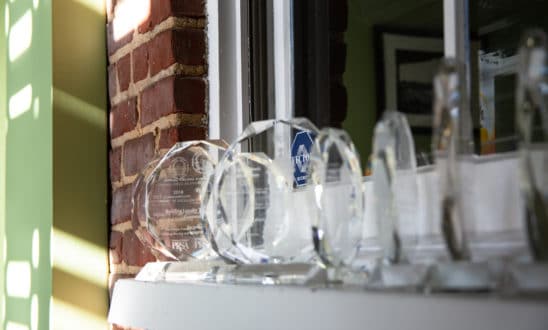
It’s always nice when you can add “award-winning” in front of words like ‘agency’ and ‘campaign.’ And last night at the Virginia Public Relations Awards, put on by PRSA Richmond, we were honored to be able to add some more award-winning work to our portfolio.

Kudos to all of our PRSA friends who took home top awards this week. We may not have taken home Best in Show this year but we’re grateful to our clients who brought us these interesting and fun projects. Below are some details on our award-winning clients and work that took home a few statues last night.

Smartphone Applications

Hodges Digital Strategies and Hilldrup developed a user-friendly app that adhered to Hilldrup’s brand standards and could be developed within the parameters of the iOS. Based on frequent customer requests, the app was built to include helpful features like storage box inventory, shipment tracking, currency convertor, friends & family new address notifications, how-to moving articles and videos, and links to set up local utilities. With more than 2,000 downloads since launching, the app averages 208 downloads per month.

Editorials/Op-Ed Columns

  • Award of Merit
  • Creative Capital: Fill in the Blank Corridor

Josh Dare thinks Interstate 95 could use a makeover – especially the part that runs through the heart of Downtown Richmond. Once he had this idea, he got to work. An OpEd in the Richmond Times-Dispatch started the conversation and from there the idea has spread. Multiple articles appeared after his initial OpEd, he received countless emails in support of the idea and a committee has been formed among some of Richmond’s elite influencers to make the corridor represent Richmond’s rich history, bright future and unique personality.

Media Relations

Small Voices, Big Dreams is the ChildFund International’s annual survey that identifies the hopes, dreams and fears of children across the globe. The Hodges Partnership used the new data and was able to secure interviews and stories with Reuters, CBS Radio, USA Today, Richmond Times-Dispatch and several other outlets.

Newsletters

  • Award of Merit
  • Clear Skies Ahead 2012 Newsletter Campaign
  • ​Client: Chesapeake Bank

Long-time client Chesapeake Bank asked The Hodges Partnership to help improve its readership metrics for its Clear Skies Ahead newsletter. By setting achievable click-through and open rate goals (25% and 11%, respectively) and a incorporating a fresh approach to content that touched on key messages and, more importantly, topics that the readership cared about, the needle began to move. Since the new changes were implemented, the Clear Skies Ahead newsletters surpassed click-through and open rate goals each month.

0 commentsPosted in: Public Relations  |  Richmond  |  The Hodges Partnership

Measurement: drop the ruler, break out the analysis and then celebrate

April 26, 2013 | by Casey Ferguson

Image courtesy DBduo Photography on Flickr​While I know I’m not alone, I do know that I’m among the small percentage of professionals who have only practiced public relations in the digital age. Facebook, Twitter, blogs and online news sites have always been a part of my media mix.

But with so much information out there and different vehicles to carry the message it can be tricky to know which outlets and influencers really carry weight and can make an impact on a brand’s goals.

Get this, legend has it that PR people once measured success in newspaper column inches. Then an impression number was slapped on the media report and everyone celebrated. Doesn’t that sound fabulous? Well, don’t pop the champagne yet. Not until we also measure engagement, reach, relevancy and influence.

Wednesday, Katie Paine, CMO of News Group, spoke to PRSA Richmond to shed light on how the world of measurement has changed, where it’s going and what you need to know when putting together campaigns and programs for clients and organizations. And while it may seem like common sense, she reminded us to measure what matters.

Katie started off by debunking some common myths of social media, including eyeballs aren’t equal to awareness and “likes” don’t equal engagement.

She then went into her six steps to measurement success, which are:

1.      Define your goals. Ask yourself questions like:

  • Why am I doing PR for this?
  • What problem am I trying to solve?
  • What was I hired to do?

2.      Understand your audience and its motivations. Put yourself in the shoes of your audience, find their sweet spots, know what keeps them up at night, identify their pain points and tailor your message to fit their needs.

3.      Create benchmarks. Refer to historic data and past performances and incorporate what is valued within your organization.

4.      Establish metrics. Create a key performance indicator (KPIs - or Kick Butt Index, as Katie likes to say) that is actionable, helps improve your process and is specific to your priorities. Three is the magic number when it comes to KPIs – that’s proven to be the perfect number to track.

5.      Pick a [data collection] tool. Content analysis, surveys and web analytics can help measure messaging, awareness and engagement (respectively), but sometimes, a thought-out combination of the above are needed. Katie recommends two out of three.

6.      Gain insight & take action: Katie said, “research without insight is just trivia,” so next time you pull quantitative data, ask yourself “so what,” and look for a way to qualitative put that data in context and relate it back to your goals and benchmarks. You can collect numbers and data all day, but if you don’t have an answer for the “so what” from your results, do they really mean anything?

7.      Optional: Pop Champagne. That one’s mine. I feel like we all deserve a drink after all this analysis.

0 commentsPosted in: Public Relations

Why your press release headline should be fewer than 70 characters

April 17, 2013 | by Cameron McPherson

Image courtesy topseopicks.comLast week, Gawker Media owner Nick Denton told employees to keep headlines under 70 characters. Why? Google search.

Denton explained, “Why this drastic measure? Google and others truncate headlines at 70 characters. On the Manti Teo story, Deadspin’s scoop fell down the Google search results, overtaken by copycat stories with simpler headlines.”

This announcement has implications for communications professionals writing and distributing releases over the wire. The lesson? Keep those headlines short and to the point.

Historically, headlines have been way too long. According to Schwartz MSL Research Group, 76 percent of news releases in 2011 were longer than 70 characters. In fact, the average headline length was 123 characters.

At The Hodges Partnership, we’re not huge fans of the press release to generate publicity. We much prefer to study up on journalists and write tailored, well-crafted pitches. But, if you’re going to distribute a release, why not optimize it to boost your company’s search results?

For the most impact, follow the advice of Gawker and write headlines that are short and succinct. Of course, a headline is just one part of optimizing a release. For more tips, check out this BusinessWire article.

A good rule to keep in mind: Whether you’re writing for search engines, journalists or readers, everyone prefers conciseness.

If Shakespeare were alive today, maybe he would’ve had a career in communications; as it turns out, brevity really is the soul of wit. 

0 commentsPosted in: Public Relations

Content Is King: The Presentation

March 27, 2013 | by Jon Newman

Thanks again for the great turnout today at the PRSA Richmond lunch. It’s great to see so many people passionate about what we do, especially in the ever-evolving area of social med…opps, sorry, content management and public relations.

Due to popular demand, here’s the presentation for you to use and share.

Thanks also for all the great questions at the end.  It is always interesting to gauge the evolution of what we do and how we’re trying to do it by the quality of those questions.  It is once again clear to me that we in the RVA PR universe should be proud of what we do and the level at which we do it.

If you have additional questions about the “King and Queen,” or if you were too shy to ask, please leave them in the comment space below and I’ll be happy to take shot at answering.

6 commentsPosted in: Public Relations  |  Social Media

Content Madness

March 18, 2013 | by Jon Newman

OK, another cheap attempt to tie blog content into March Madness, I know.

But in this case I feel pretty justified.

Ask anyone who works with me, ask my wife and kids. I’ve been obsessing over this #PRSARVA presentation on content I’m giving on March 27 (I hear tickets are going fast so register here). I actually wrote a first draft during the VCU-A10 finals yesterday. If that’s not madness I don’t know what is.

Contributing to the madness is the fact that the recent Facebook poll on the topic (please vote on our page) shows that you the content curators are a bit mad over the topic as well. 

There is no real consensus on the question of what is “the toughest part about managing content?” The votes are split among finding the content itself, time management, finding content that breaks thought, and the dreaded “other.”

Previewing my presentation a bit, I’ll try to focus on the following “brackets” (couldn’t resist):

  • Strategy
  • Planning
  • Content and context
  • Promotion
  • Reporting

By breaking those down my hope is that it might ratchet down the level of daily madness felt by all who manage content.

And notice I haven’t used the “SM” phrase yet. Talk about things that drive me mad…

0 commentsPosted in: Marketing  |  Public Relations  |  Social Media

#PRSARVA, Let’s Start A Content Conversation

March 11, 2013 | by Jon Newman

I must admit that when I was approached to present to PRSA Richmond a few months ago, I bristled.

Not because I didn’t want to talk (who ever knew me to not want to talk) but because I was asked to talk about social media.

I never wanted to be the “social media guy” especially now since social media as we knew it so different and THP as an agency doesn’t view it as a separate piece of the PR puzzle. It is as much a part of the PR spectrum as is earned media through media relations, internal communications and key stakeholder communications. It should flow from strategic messaging. It should communicate and promote your content.

The last time I spoke to PRSA I said that PR should take the lead in the social media movement. I said we had a window and an advantage over our advertising cousins and that we should lead and seize the moment. We did seize it for a while but that moment is gone. Ad agencies, digital agencies, etc. have caught up and in some cases passed us. They did so because they committed to design and technology. In some cases PR agencies and groups did so as well (see HDS). I give that battle a push, as they would say in Vegas.

Now we come to the current day battleground, the battle over content. Here’s PR’s chance once again. We are the original content creators, promoters and sellers. We write, we pitch, we again sell. This remains, for the most part, our distinct advantage. But we will lose if we don’t get smarter about it.

In the last year or so we’ve seen a shift from learning about all the different platforms (blogs, Facebook, Twitter, LinkedIn, Pinterest, Instagram, Tumblr) to getting comfortable with them as content platforms. While we wait for the next big thing, my guess is that these will be the big things for a while. Marry them with the phenomenon called Multi-Screening and the challenge for PR folks is clear.

We “win” (for ourselves, our clients, our companies) if we create solid, consistent content that breaks through the platforms, that is easily promotable among all of them, and that people can see and digest no matter which screen they are viewing at the time.

Also in the past year I’ve talked, counseled and audited a number of our clients and the themes and issues are pretty consistent. Here’s where I’d like to start our discussion that will continue during my presentation and live on way past March 27. Here are some common themes (some even myths), see if you see yourself or your organization in one or more of them.

  • Content should be specially created for each platform
  • We should segment the type of content for each platform
  • All content should flow through one person
  • We have no time to blog
  • Social media is viral but we’re seeing no growth
  • Content created for these platforms should be for entertainment or fun purposes only
  • We can’t repurpose content across platforms
  • These platforms are made for B2C not B2B
  • We spend way too much time creating content
  • There is no way to measure the ROI

If you see yourself admitting to one or more of these statements, I’m sorry to say there is no 12-step program for you or your organization. There are ways to make things easier and we can talk about them between now and March 27.

If you have a story to share or a solution you have come across or just want to vent, I’d love to hear from you. I’m putting together my talk in the next few weeks and I’d some to include your questions, problems and solutions in it. Please comment below, email me at jnewman@hodgespart.com or tweet me at @jonnew

Help me create my content about content. Fear not though, I have lots of opinions about this stuff and I won’t be afraid to share them on March 27. Register here for the PRSA lunch.

(BTW, my goal is to jam the room with 200 people so now that I’ve said that in public please register so I don’t look stupid.)

2 commentsPosted in: Public Relations  |  Social Media

Spreading the Word

March 06, 2013 | by Jon Newman

It’s rare that I use this space to brag about our work, but brag I must.

We just added a new case study to the front of our website. It’s the first thing most people see when coming to the site so the work and results need to literally jump out at you.

That’s the case in our recent work for Reginald’s Homemade.

We take pride in working for all our clients, but we especially love taking small relatively unknown brands and putting them on the national radar.  Our prime example of that is the work we’ve done for about ten years for Snagajob. We hoping that our work with Reginald’s will last that long as well.

Our client, Andrew Broocker, has created an exceptional line of peanut (and other nut) butter products.

Born literally out of his personal experience and story, the all-natural product line is not only healthy but tastes great.

Our staggered media relations approach focused first locally in the Richmond area and then grew to a national push with a focus on online food media and bloggers that could help move the sales needle.

If Reginad's made a white-wine-flavored nut butter, we'd have sent that.That national push has resulted in coverage by SHAPE, Bon Appétit, Cooking Light, Tasting Table, CHOW.com and Daily Candy.  But the big “hits” came when Kathie Lee and Hoda ate the product on the Today Show and most recently when Prevention named Reginald’s as one of the top-100 cleanest products of 2013.

I wish I could say there’s a magic to this success. There’s not.

If there’s one thing I think we at THP do better than anyone (and I do mean anyone) it’s national media relations. That’s a mixture of research, packaging, writing, prompting, cajoling and even sometimes praying. But we’re extremely good at it. Period. These results speak for themselves.

So congrats to the Reginald’s team of Lindsay Grant, Cameron McPherson and Megan Semmelman (Megan is a media relations Ninja, btw) for all the great work.

And thanks and congrats to Andrew for making such a great product because without that all the praying in the world wouldn’t make our media relations efforts successful.

1 commentPosted in: Media Relations  |  Public Relations  |  The Hodges Partnership

Cruise Control

February 19, 2013 | by Josh Dare

Thinking about the Carnival Cruise Line floating disaster, I am trying to put myself in the place of those that endured days of insufferable hot air, of ubiquitous stench and of that panicky sense of confinement when you know there are no options for escape. 

Yes, I’m talking about Carnival’s PR team.

You have to feel for them, a group that likely spends most of its time arranging “fam” tours for reporters and devising fun social media promotions to keep its image modern and fresh, so that people will no longer associate the brand with the likes of Kathy Lee.  (Hard to forget this.)

Good thing for Dufresne that it was raining so hard.Instead, last week they not only had to deal with widespread news coverage – on a scale that paralleled the Apollo 13 disaster no doubt – but the PR folks in Miami also were forced to confront the biting wit of late-night comics, Comedy Central’s fake news anchors and even a show-opening jab by SNL. (Thankfully for them, it was clever but not all that funny.) I kept waiting for one of these shows to equate the episode with Andy Dufresne’s escape from Shawshank. Scatology, after all, makes for great although often wince-enducing humor.

At the PR team’s disposal was a CEO who by all accounts was willing to say the gratuitously right things – apologies and appreciations mostly – and the company has backed it up by an offer to not charge the 3,100 passengers for what will likely be their most memorable vacation ever. Plus, they’ll get a voucher for a future Carnival cruise, should they be so courageous, and 500 bucks, just for their trouble. You know, the average bar bill on one of those cruises. 

The offer will likely test every bit of skill that Carnival’s PR team can muster because, let’s be honest here, the compensation smells about as bad as the corridors on the Triumph.  

Of the hundreds of people who gathered to greet the ship when it pulled into Mobile, there likely were a few who were not attorneys. Already the first lawsuits have been filed.

What Carnival has not addressed, of course, are reports that the ship was not in seaworthy shape, that it left port with one working engine and had a history of problems. Let’s just be glad Carnival is not in the airline business. 

How the company responds to this underlying issue will likely determine how well it can rebound from the ordeal and whether or not it can rid itself of the stench that is still hanging in the air.

Meanwhile, thousands of the more than 2 million Facebook fans have taken up the debate on the company’s Facebook page. By my count, supporters and detractors seem to be fighting to a draw, and if I’m Carnival right now, I’d take that as a Triumph.

Good luck, Carnival PR practitioners. Here’s hoping the same people that made the decision to let the ship leave port will make better decisions in the days and weeks ahead.      

0 commentsPosted in: Crisis Communications  |  Public Relations

The Burger King Fry-asco: A Chance to Reclaim Its Social Media Crown

February 18, 2013 | by Cameron McPherson

The defaced @BurgerKing Twitter profile.It’s been a bad few weeks for Burger King. First, horse meat was found in beef patties at European locations. And today, hackers took over the company’s Twitter account, tweeting lewd and inappropriate content and making it appear McDonald’s bought Burger King. Now, the @BurgerKing account is receiving more retweets than the Triple Whopper has calories.

Many mainstream news outlets jumped on the story, including ABCNews.com and CNN.com.  If I was a betting man, I’d say this story lands in the nighttime news broadcasts and tomorrow’s papers.  Needless to say, it’s not a happy President’s Day for the Burger King communications team.

Don’t worry: this whopper of a problem could turn into a positive thing for the Burger King brand. Here’s why this could be a good thing:

  • Engagement:  As one commenter in this Mashable article said, Burger King has the potential to “make it their Oreo power outage moment.” And, he’s right. Getting a large and engaged audience in social media is one of the toughest challenges for a brand. All eyes are on Burger King. If the brand can figure out a creative way to spin this, people on and off Twitter will listen.
  • A boost in followers: After the hack, @BurgerKing followers jumped by 5,000 in less than 30 minutes – they’ve accumulated a staggering 30,000 more followers overall. You can’t even get that with a paid campaign. Sure, some of those followers engaged with the brand for the wrong reasons, but it doesn’t mean Burger King can’t try to convert these news followers into fans. (I’m thinking free fries, what about you?)
  • Free press: The brand is number three in the marketplace, under McDonald’s and Wendy’s. Google News is currently showing more than 52,700 news articles about the hack. The press is hungry for a response and this is an opportunity for the flame-grilled burger brand to tell its side of the story – and get some free publicity out of it.

The trick with all the positives above is that Burger King needs to be quick, creative and nimble. Will Burger King rise to the challenge? I hope so.

For the record: I’ve always thought Burger King had the best fries. 

0 commentsPosted in: Crisis Communications  |  Public Relations  |  Social Media

How to survive in the digital age (without always being digital)

January 22, 2013 | by Casey Ferguson

To the disbelief of my coworkers, family, friends and just about everyone I meet, I work in the world of PR and social media and I have no cable or internet at my apartment.  Maybe it was my lack of motivation in actually going through the set-up process, but it was mostly for the sanity of disconnecting for a couple of hours a day.

Jacob Geiger of Work it, Richmond wrote an article last summer that spoke to vacations and the need to disconnect from your devices.  I’ve simply taken that principle and have blown it out to a full time practice.  How does one survive without constantly being tuned in, turned on and plugged into the internet stratosphere?   Easy – it’s all about time management.

  1. Outline tasks on a daily basis, breaking down larger projects over a set time span. By jotting down your to-do list, you can visually see how much you have/need to achieve before the end of the day. With larger projects, even in school, I segment out the project over a couple of days, which prevents me from being bogged down and makes a larger, scary task seem like a piece of cake.
  2. Working within the confines of a work day keeps you on task and on deadline. Who doesn’t work better with a deadline? When I walk into work, it is a t-minus countdown until I lose internet access. Having that on your radar helps sharpen focus and gets works completed.
  3. Find the time and an outlet to decompress in your hours outside of the office. I turn my day into a decompress sandwich. I’m up early for a workout, go into the office for a full day’s work then go home where I read, get lost in a good movie or catch up on some reading.

Sure I still have a smartphone (a Blackberry, so I’m only barely connected) that I check emails and my Twitter feeds while at my apartment.  However, it’s mostly for the occasion tweet or Facebook post.

Do you have any disconnect routines? Could you (or do you) live with being connected 24/7? Leave a note in the comments. I’ll check it during business hours.

0 commentsPosted in: Public Relations  |  Social Media